
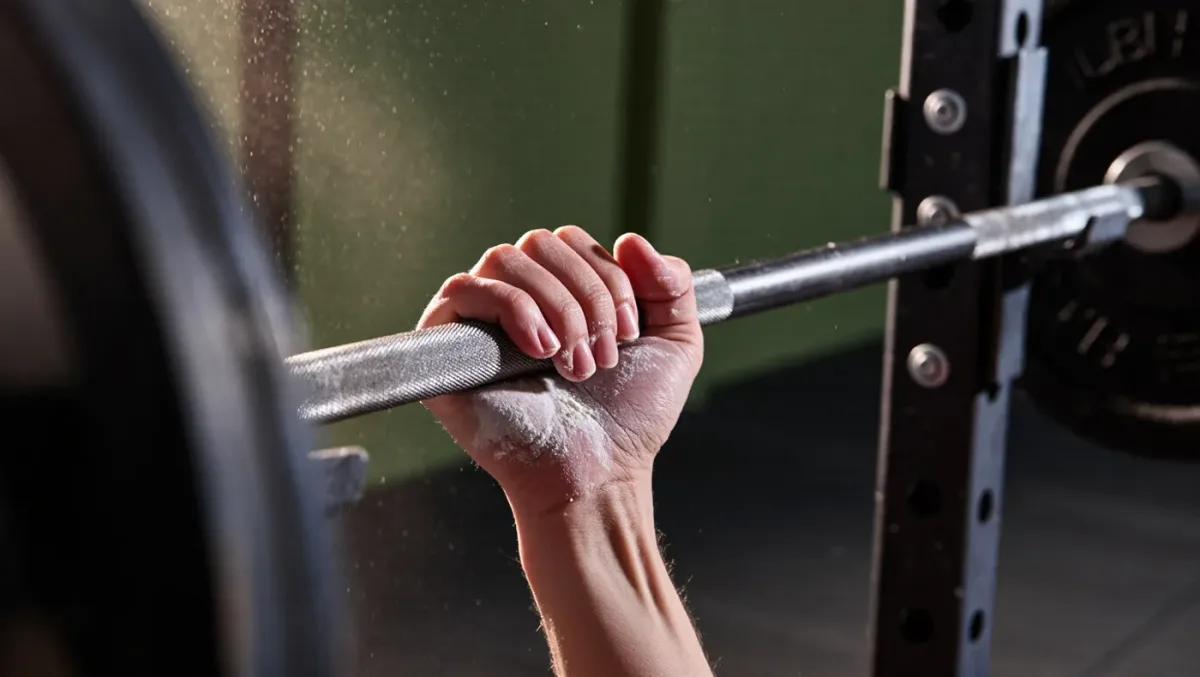
Strength training is one of the better-evidenced long-term health investments available to women: a 2022 meta-analysis in the British Journal of Sports Medicine pooling 16 prospective studies found that 30 to 60 minutes per week of muscle-strengthening activity was associated with a 10 to 20 percent lower risk of all-cause mortality, cardiovascular disease, cancer, and diabetes. The WHO's 2020 guidelines recommend muscle-strengthening activity at least twice a week for adults — a recommendation most women currently do not meet.
This article publishes information, not medical advice. It explains what the cohort studies show, why the findings matter particularly for women, and how the physiology — muscle, bone, and metabolic health — connects to the numbers. Programs should be matched to your own health status, ideally with a clinician's input if you have existing conditions.
What does the cohort evidence actually show?
Cohort studies follow large groups for years and compare health outcomes across activity levels — strong for finding associations, careful work for pinning cause. The 2022 BJSM meta-analysis by Momma and colleagues combined 16 cohorts covering hundreds of thousands of adults: muscle-strengthening activity in the 30-to-60-minute weekly range was associated with a 17 percent lower risk of all-cause mortality, 17 percent lower cardiovascular disease, 12 percent lower cancer, and 17 percent lower diabetes risk compared with doing none.
More was not better in a linear way: the analysis found a J-shaped curve, with the associations plateauing above roughly 60 minutes a week and, in some analyses, attenuating at very high volumes. Two earlier US cohort analyses — a 2019 study in Medicine & Science in Sports & Exercise and 2016 work in the same journal — reported one to two hours of resistance training per week associated with 40 to 70 percent lower cardiovascular events and lower all-cause mortality, adjusted for aerobic exercise.
Why does this matter specifically for women?
Because the health capital at stake is sex-specific. Women start adulthood with less muscle mass and smaller bones than men, then lose both faster at two pinch points: the postpartum period and menopause, when falling estrogen accelerates muscle and bone loss, per NIH reviews of sarcopenia — the age-related loss of muscle mass and strength. By the 80s, substantial fractions of women cannot rise from a chair without using their arms, a mobility marker tied to independence.
Strength training counters each piece. It builds muscle across the lifespan, including in 80- and 90-year-olds, per trial evidence. It slows bone loss, and in the strongest available trial — the 2018 LIFTMOR study in the Journal of Bone and Mineral Research — postmenopausal women with low bone mass who performed supervised heavy lifting twice weekly for eight months improved spine and hip bone density and physical function. It also improves insulin sensitivity, supporting the diabetes findings in the cohorts.
Muscle, bone, and metabolism: the mechanism in brief
Skeletal muscle is not just movement equipment. It is the body's largest glucose sink — contracting muscle takes up blood sugar independently of insulin, which is why resistance work acutely improves glycemic control. Muscle mass also protects against falls and frailty, and grip strength, a cheap proxy for total muscle function, tracks with mortality in cohort studies, per NIH-supported aging research.
Bone responds to load. Mechanically, bone tissue adds density where force is applied — the reason heavy, slow resistance and impact loading outperform swimming for bone, per the LIFTMOR findings. For women this matters most in the decade around menopause, when an estimated 10 to 20 percent of bone density can be lost rapidly without intervention, per the Bone Health and Osteoporosis Foundation.
One honest limit of the evidence: cohort associations are adjusted for confounders, but people who lift also tend to differ in other ways — diet, smoking, healthcare access. Randomized trials confirm the mechanisms — muscle, bone, glucose — which is why the causal reading is plausible, yet the exact mortality percentages carry more uncertainty than their precision suggests.
Related stories: Loneliness and Health: What the Research Actually Shows · Alcohol Guidelines for Women, Explained: One Drink, Cancer, and the Heart.
How much is enough, per the guidelines?
| Guideline | Recommendation |
|---|---|
| WHO, 2020 | Muscle-strengthening activity, all major muscle groups, at least 2 days per week, on top of aerobic activity |
| US Physical Activity Guidelines, 2nd edition (HHS, 2018) | Same: 2 or more days per week of strengthening, plus 150–300 minutes moderate aerobic activity |
| BJSM meta-analysis, 2022 | Observed benefit floor at ~30–60 min/week; no extra benefit demonstrated beyond ~60 min |
| Bone-specific (LIFTMOR protocol) | Supervised heavy lifting 2x/week improved density in low-bone-mass postmenopausal women — under supervision, not a self-start protocol |
The meeting point of guideline and evidence: two supervised-or-progressive sessions a week covering the major muscle groups is the dose the data support, and it is less time than most people assume — the observed benefits begin near 30 minutes a week of actual lifting.
Is it ever too late to start?
No, and the trials are direct about it. Resistance-training trials in women in their 70s through 90s show meaningful gains in strength, walking speed, and function within months, per NIH aging research. The LIFTMOR participants averaged 65 years old. What changes with age is not the benefit but the on-ramp: beginners over 40 need longer light-loading phases, more attention to technique, and clearance on joint and cardiac issues — a subject its own guide covers in more depth.
When to talk to a clinician
Check in with a clinician before starting or escalating resistance training if you have known heart disease, uncontrolled high blood pressure, a history of aneurysm or herniated disc, osteoporosis already diagnosed, joint replacements, or if you are pregnant or recently postpartum. Also seek care for chest pain, dizziness, or unusual breathlessness during exertion, and for any suspected injury to bone or tendon. If you have low bone density, ask specifically whether supervised heavy lifting is appropriate for you — the trial evidence is promising but supervision-dependent.
Frequently asked questions
Does lifting make women bulky? No, not at guideline doses. Women have roughly one-tenth the circulating testosterone of men, per NIH endocrinology references, and muscle gain in trial programs is modest and gradual. What women in studies reliably gain is strength, bone density, and metabolic health. The bulk concern is a gym myth with no trial support at the volumes the evidence recommends.
Do I need a gym, or do bands and bodyweight count? Intensity against load is the active ingredient, not the equipment. The 2022 BJSM meta-analysis included studies using machines, free weights, bands, and bodyweight; what matters is progressive overload — challenging the muscle and increasing the challenge over time, per exercise-science guidance. Home bands and bodyweight squats qualify when programmed seriously.
Should I still do cardio? Yes — the effects are partly independent and partly multiplicative. The 2022 analysis found the lowest risks occurred with both strengthening and aerobic activity combined, echoing the HHS 2018 guidelines, which specify both. A realistic pattern for many women: two 30-to-45-minute strength sessions plus accumulated walking or other moderate cardio through the week.