
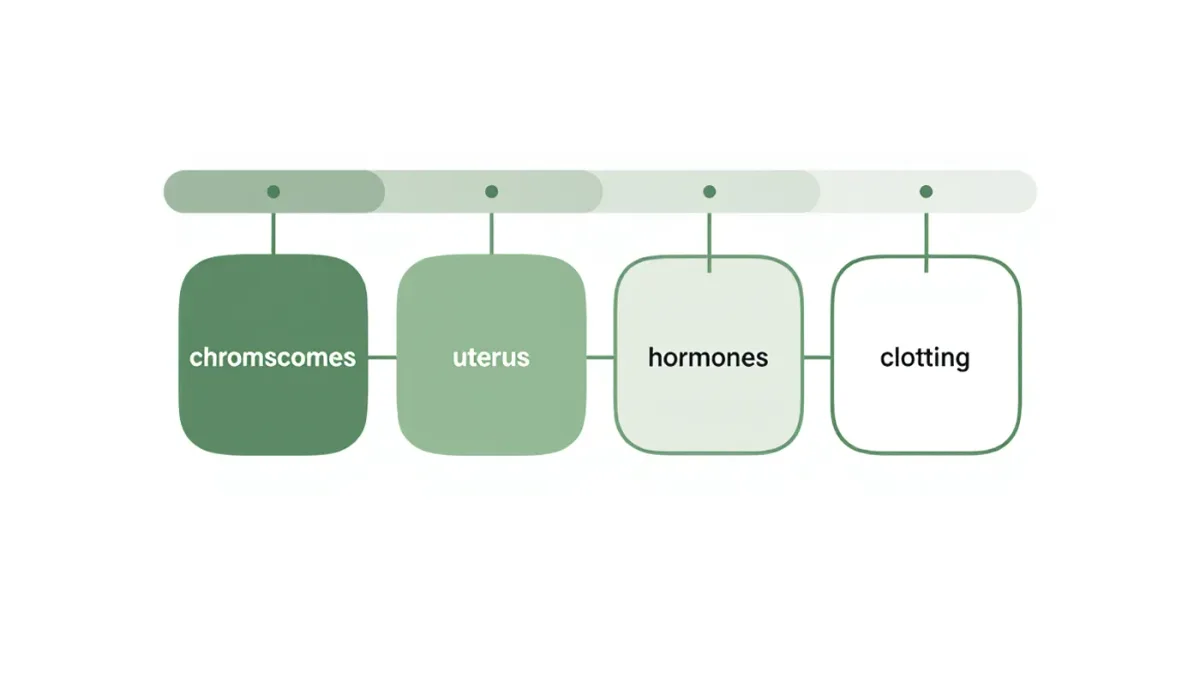
About 10 percent of clinically recognized pregnancies end in miscarriage, per ACOG's 2018 practice bulletin on early pregnancy loss, and the single largest documented cause is a chance error in the embryo's chromosomes — a random event in cell division that no one causes and no one can prevent. Nothing in the medical literature supports the idea that miscarriage results from working, exercising, having sex, or a moment of worry. This article explains what researchers and clinical bodies actually know about causes, and what remains unexplained.
This article publishes information, not medical advice, and it discusses pregnancy loss directly. If you are currently pregnant after a loss, or grieving one, take what is useful here and leave the rest; your own clinician is the right partner for any personal medical question.
How common is miscarriage?
ACOG's 2018 practice bulletin estimates that about 10 percent of clinically recognized pregnancies — those known to a clinician, typically confirmed on ultrasound or testing — end in early pregnancy loss, with the large majority occurring in the first trimester. Including very early losses that occur before a pregnancy is recognized, some estimates run higher. Age matters measurably: a 2019 population study of more than 420,000 pregnancies in BMJ by Magnus and colleagues found miscarriage risk rising from about 9 percent at age 25 to roughly 24 percent at 35 and about 51 percent at 40 — reflecting the rising share of eggs with chromosome errors as age increases, not anything about health habits.
What actually causes miscarriage?
The documented causes fall into several groups, described in ACOG's practice bulletin and the American Society for Reproductive Medicine's guidance on recurrent pregnancy loss (2012, reaffirmed since).
- Chromosome errors in the embryo. The largest category. Per ACOG, about half of first-trimester losses involve an abnormal number of chromosomes — an error in how chromosomes divide at conception or in early development. These events are random, they recur by chance rather than by inheritance in most cases, and they generally cannot be prevented.
- Uterine and cervical factors. Structural issues — a uterine septum, large fibroids distorting the cavity, or, in later pregnancy, cervical insufficiency, in which the cervix opens too early — are associated with a minority of losses.
- Medical conditions. Uncontrolled thyroid disease, uncontrolled diabetes, and the antiphospholipid syndrome — an autoimmune clotting disorder — are established, treatable contributors, per ACOG and ASRM guidance.
- Hormonal and other factors. PCOS-related anovulation and elevated prolactin are associated with some losses, though the mechanisms are less clear.
- Infections and exposures. Certain infections and significant exposures — smoking, heavy alcohol use, and certain drugs — are associated with increased risk in observational research summarized by ACOG and the CDC.
Even with complete evaluation, many losses remain unexplained — a genuine limit of current knowledge, not an omission in anyone's care.
What does not cause miscarriage?
The evidence is clear on several everyday exposures, per ACOG's guidance: moderate caffeine intake — up to about 200 milligrams a day, roughly one 12-ounce coffee — has not been associated with miscarriage in the guidance's assessment of the evidence; exercise during uncomplicated pregnancy is safe and recommended, per ACOG's 2020 guidance on physical activity; sexual intercourse does not cause loss in normal pregnancy; and working or experiencing ordinary stress has not been established as a cause. Yet surveys have repeatedly found that many people who experience loss believe they caused it — a documented gap between evidence and public understanding that places weight where it does not belong. Most miscarriages cannot be prevented, and ACOG's guidance says so plainly.
What is recurrent miscarriage, and when is it evaluated?
Recurrent pregnancy loss is typically defined as two or more losses, per ASRM's 2012 committee opinion; ACOG's guidance often initiates evaluation after two or three. It affects roughly 1 percent of couples, per ASRM. An evaluation, when recommended, examines the categories above: chromosome testing of the pregnancy tissue when available, uterine imaging, thyroid and glucose testing, and antiphospholipid syndrome antibodies. Even after thorough work-up, a large share of recurrent cases — ASRM guidance cites around half or more — remain unexplained, and importantly, an unexplained history does not mean poor chances: per ASRM, people with unexplained recurrent loss still have favorable live birth probabilities in subsequent pregnancies, a finding that is genuine and worth knowing.
Related stories: Egg Freezing: What the Process Involves · What Fertility Testing Actually Measures.
What happens medically during and after a loss?
ACOG's practice bulletin describes three documented management paths for confirmed early loss: expectant management, letting the process complete on its own under monitoring; medical management with medications that help the uterus expel tissue; and surgical management, typically a procedure called dilation and curettage, which removes tissue and can be used when bleeding is heavy or when a person prefers it. The choice is clinical and personal, made with a clinician based on timing, symptoms, and preference. Physical recovery is usually measured in days to weeks; emotional recovery has no standard timeline, and per ACOG, grief after loss is common and does not follow a schedule.
Does one miscarriage mean future pregnancy is at risk?
No. After a single early loss, subsequent pregnancy success rates remain high — per ASRM guidance, the prognosis after one loss is generally excellent, and per ACOG most people who experience one miscarriage go on to have healthy pregnancies without any evaluation or intervention. One loss is usually chance, in the statistical sense: with about half of first-trimester losses tied to random chromosome errors, a single event is well within ordinary occurrence.
When to talk to a clinician
Seek care promptly during pregnancy for heavy bleeding, especially with clots or tissue passage, severe cramping, dizziness, or shoulder-tip pain, which requires urgent evaluation to rule out ectopic pregnancy, per ACOG guidance. After a loss, schedule follow-up to discuss recovery, the tissue testing options available, and — when you are ready — plans for future pregnancies. If you have had two or more losses, ask whether an evaluation for recurrent pregnancy loss is appropriate for you. And if grief is persistent or interfering with daily life, say so: support is a medical topic too.
The dominant cause of miscarriage is a random chromosome error — evidence that shifts the question from "what did I do wrong?" to what, if anything, deserves evaluation going forward.
Frequently asked questions
Can stress cause a miscarriage? Ordinary stress — job pressure, worry, a frightening event — has not been established as a cause of miscarriage in the medical literature reviewed by ACOG. Severe, catastrophic exposures are a different research category, but everyday stress does not belong on the cause list. The belief that worry caused a loss is common and understandable, and it is also not supported by the evidence.
Should I be tested after one miscarriage? Generally no. Per ACOG and ASRM guidance, evaluation is usually started after two or three losses, because a single loss is common and rarely signals an underlying problem. Exceptions include findings during the loss itself — such as unusual anatomy on ultrasound — or a personal history suggesting a treatable condition. Your clinician can weigh your specific history.
Can I prevent miscarriage? Mostly, no. The leading cause — random chromosome errors — is not preventable. What reduces risk where evidence supports it: managing chronic conditions like diabetes and thyroid disease before pregnancy, not smoking, avoiding alcohol, and taking folic acid, which is established for preventing neural tube defects, per the CDC, though its effect on miscarriage is not demonstrated. Prenatal care addresses the factors that are modifiable.
How long should we wait before trying again? Physical recovery is often a matter of days to weeks, and per ACOG there is no medical basis for the old advice of waiting three cycles in most cases — ovulation can return within weeks, and studies have not shown harm in conceiving soon after an early loss. The right time is also emotional. Clinicians can discuss contraception if more time is wanted, without judgment.
Do miscarriages run in families? Rarely in a meaningful way. Most chromosome errors in embryos are random events, not inherited, per ACOG. A small minority of recurrent losses involve a parental chromosome rearrangement called a balanced translocation, which is exactly what the recurrent-loss evaluation checks for with a blood test. A family member's single loss does not raise your risk; patterns across multiple losses are what prompt investigation.