
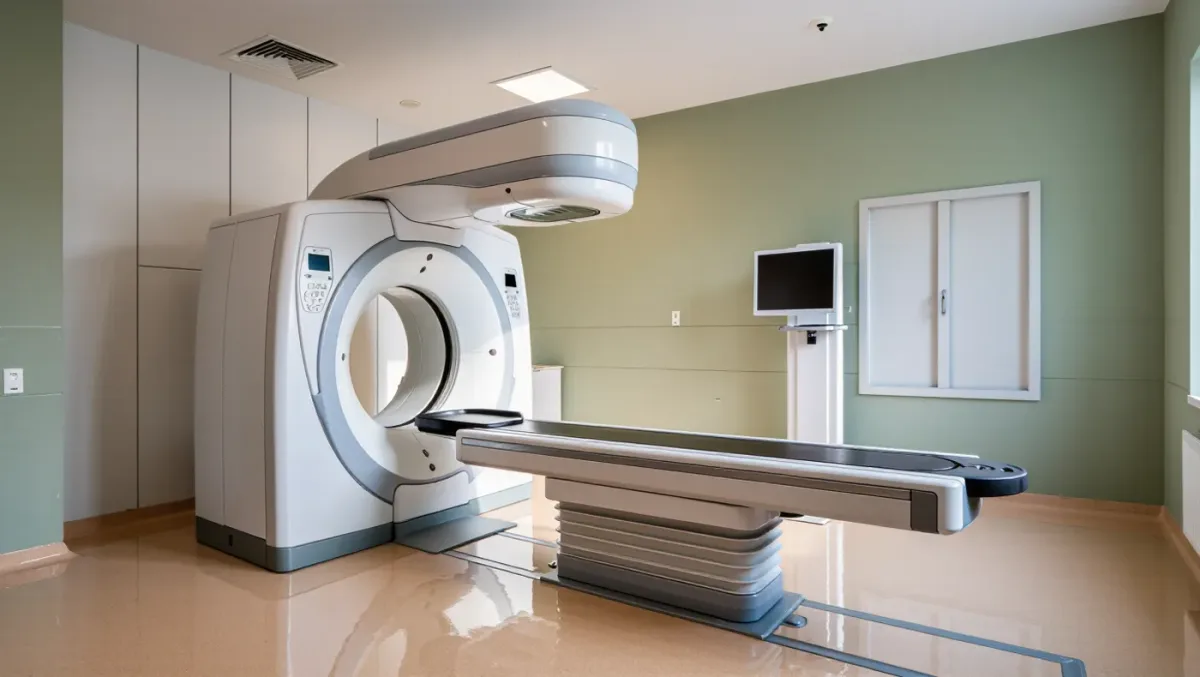
The clearest answer: women should be screened for osteoporosis starting at age 65, and earlier — before 65 — when risk of fracture is elevated, per the US Preventive Services Task Force's 2025 final recommendation. The screening test is a DXA scan, a quick, low-radiation measurement of bone mineral density, usually at the hip and spine, and the result is expressed as a T-score that tells you where you stand: normal, osteopenia, or osteoporosis.
Osteoporosis is a condition in which bones lose density and microstructure, making them fragile enough to break from a fall from standing height — or in advanced cases, from minor stress. Per the Bone Health and Osteoporosis Foundation, roughly 10 million Americans have osteoporosis and another 43 million have low bone mass, and about half of women over 50 will break a bone because of osteoporosis in their remaining lifetime. This article explains who should be screened, when, and how to read the result. It publishes information, not medical advice — a personal screening decision belongs with you and your clinician.
What exactly does the USPSTF recommend?
The Task Force's 2025 statement, published in JAMA, gives a grade B recommendation to two groups: all women 65 and older, and postmenopausal women younger than 65 who are at increased risk of osteoporotic fracture. For the younger group, the recommendation describes a two-step approach: first assess risk — clinically or with a fracture-risk calculator such as FRAX — and then screen with DXA those whose risk warrants it. The Task Force found insufficient evidence to recommend screening men, though men do develop osteoporosis; and Medicare and most insurers cover a bone density scan under the criteria above, with repeat scans generally covered every two years, per the CDC's summary of Medicare benefits.
What happens during a DXA scan?
Dual-energy X-ray absorptiometry (DXA) is a scan in which you lie fully clothed on a padded table for about 10 to 20 minutes while a scanner arm passes over your hip and lower spine, measuring how much X-ray energy your bones absorb at two different energies — the difference reveals mineral density. Radiation is minimal, roughly a tenth of a standard chest X-ray for a typical scan. No fasting, injections, or prep are involved; you simply avoid taking calcium supplements for about a day beforehand, since they can overlap the measurement area. Central DXA — hip and spine — is the diagnostic standard; wrist and heel devices screen but do not diagnose, per the International Society for Clinical Densitometry's position statements.
What does a T-score mean?
The T-score compares your bone density with that of a healthy young adult woman, in standard deviations, using diagnostic thresholds set by the World Health Organization in 1994 and still in use: a T-score of -1.0 or above is normal; -1.0 to -2.5 defines osteopenia, meaning bone density below normal but not osteoporosis; and -2.5 or below means osteoporosis. If you have already broken a bone from low-impact trauma, osteoporosis is diagnosed regardless of the number. The score is a population comparison — it tells you and your clinician where your bones sit on a curve, which then feeds into a treatment decision that weighs much more than density alone.
Why does menopause matter so much here?
Estrogen protects bone, and its decline at menopause removes that protection abruptly. Per the Bone Health and Osteoporosis Foundation, women can lose up to 20 percent of their bone density in the five to seven years after menopause, which is why bone mass in women drops fastest precisely when screening has not yet started — the 65 threshold exists because that is when treatment trials show clear fracture reduction, not because bone loss begins then. This is also why the under-65 risk pathway matters for women with early menopause, defined as menopause before age 45, since their estrogen decline came years ahead of schedule.
Related stories: Colorectal Cancer Screening Now Starts at 45: Your Options, Compared · STI Screening: What the Guidelines Actually Recommend for Women, and When.
Who should consider screening before 65?
Per the USPSTF's 2025 risk framing, factors that raise fracture risk enough to warrant earlier screening include a parent who broke a hip, smoking, excess alcohol use, low body weight, conditions and medications associated with bone loss — long-term corticosteroid use of three months or more is the classic example — and early menopause. A tool called FRAX, developed by the World Health Organization in 2008, estimates your 10-year probability of hip and major osteoporotic fracture from those risk factors, with or without a density value; the USPSTF suggests risk assessment with FRAX as a practical way to identify postmenopausal women under 65 for whom a scan makes sense. This is an assessment conversation, not a self-diagnosis — the calculator is a starting point your clinician interprets.
How often is the scan repeated?
Not on a fixed annual rhythm. Medicare generally covers repeat DXA every two years, but evidence on intervals is more nuanced: an analysis of nearly 5,000 women published in JAMA (Gourlay et al., 2012) found that women with mild osteopenia could wait many years before rescreening — around 15 years on average for a T-score of -1.5 to -1.99 — while women closer to the osteoporosis threshold warranted rescreening in about 1 to 5 years. The schedule is therefore driven by your last result, not the calendar alone.
What happens after an abnormal result?
An osteopenia result typically leads to a discussion of bone-protective measures — adequate calcium and vitamin D intake per recommended levels, weight-bearing and resistance exercise, smoking cessation, alcohol moderation — and of whether medication is warranted based on overall fracture risk rather than density alone. An osteoporosis result, or an elevated FRAX probability, moves treatment options into the discussion; several effective drug classes exist, and the choice among them, along with dosing, is an individual clinical decision this article does not make. What screening contributes is the ability to have that conversation before the first fracture, which is the entire point of the 65-and-earlier framework.
When to talk to a clinician
Ask about screening at your next visit if you turn 65 this year and have never had a DXA; if you are a postmenopausal woman under 65 with any of the risk factors above — particularly early menopause, low body weight, long-term steroid use, or a parent who broke a hip; if you lost height, developed a curved upper back, or broke a bone from a fall from standing height or less at any age; or if you already have osteopenia and are unsure when your next scan is due. A fracture after a minor fall in adulthood is never just 'bad luck' — it is a screening-and-assessment trigger in every major guideline.
Frequently asked questions
Is a DXA scan safe?
Yes. The radiation dose is very low — on the order of a few tenths of a millisievert for a hip-and-spine study, comparable to a fraction of a chest X-ray, per the International Society for Clinical Densitometry. The scan is painless and requires no contrast or injections. The main practical limits are access and cost coverage, which follow the USPSTF age and risk criteria described above.
Can I get screened at a pharmacy heel test instead?
Heel ultrasound can suggest low bone density, but it does not diagnose osteoporosis and does not feed into the WHO's diagnostic T-score thresholds. Per the International Society for Clinical Densitometry, a diagnosis requires central DXA of hip and spine — or in some cases spine CT-based methods. Think of a community screening as a nudge toward a real scan, not a substitute for one.
Does taking calcium and vitamin D replace screening?
No. Supplements support bone health but do not measure risk or replace treatment when osteoporosis exists. Per USPSTF conclusions from 2018 on vitamin D and calcium supplementation, combined supplementation did not reduce fractures in generally healthy community-dwelling adults at typical intake levels — the reliable path is screening per guidelines, then treatment decisions with your clinician if results warrant them.
I'm 68, healthy, and feel fine. Why screen now?
Because osteoporosis is silent until the first fracture, and the first fracture is the expensive event — hip fractures in particular carry lasting disability. The USPSTF's 65-and-up recommendation exists precisely for asymptomatic women: the trials showing fracture reduction with treatment recruited people who felt well. Screening is about finding the risk while the options for acting on it are widest.